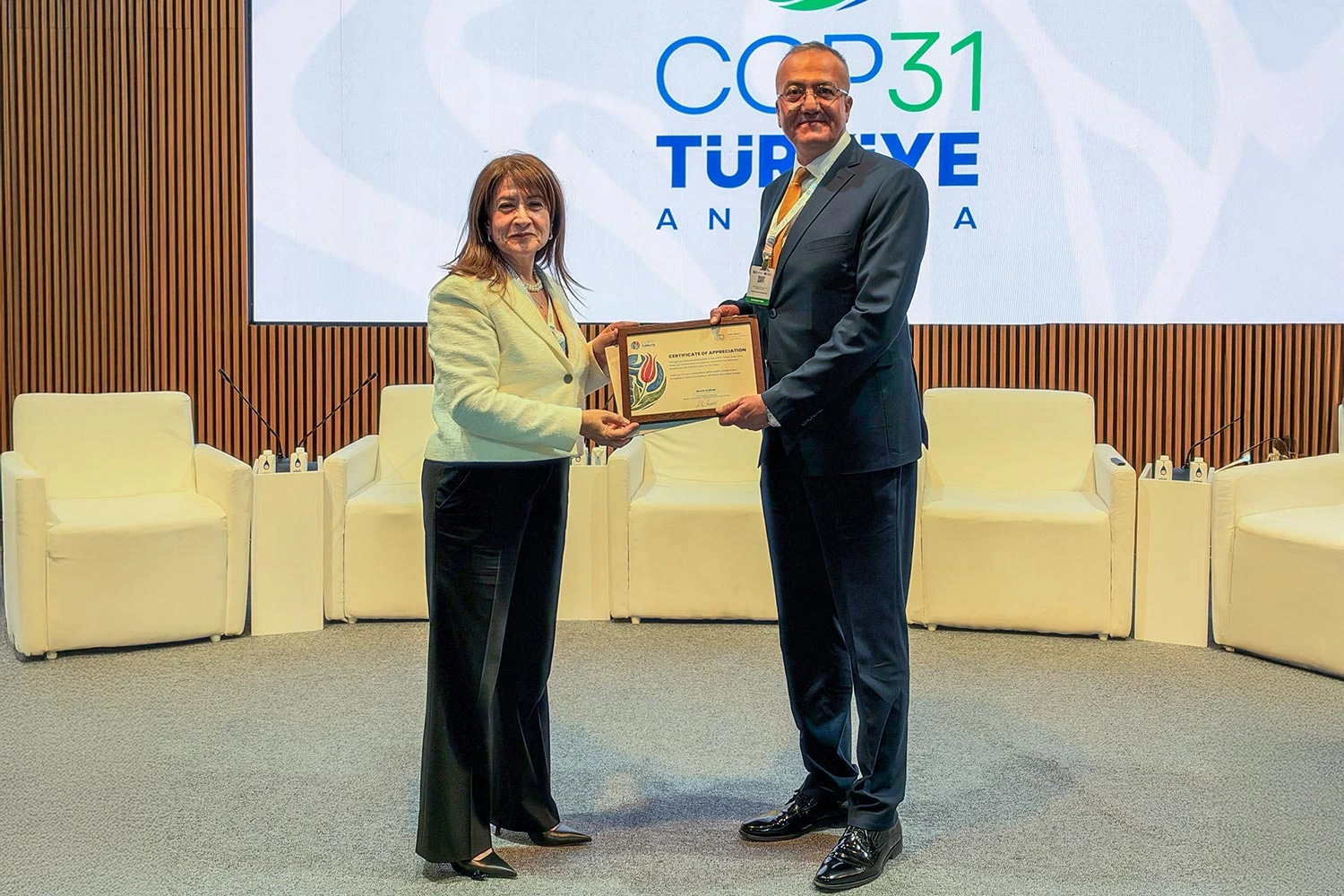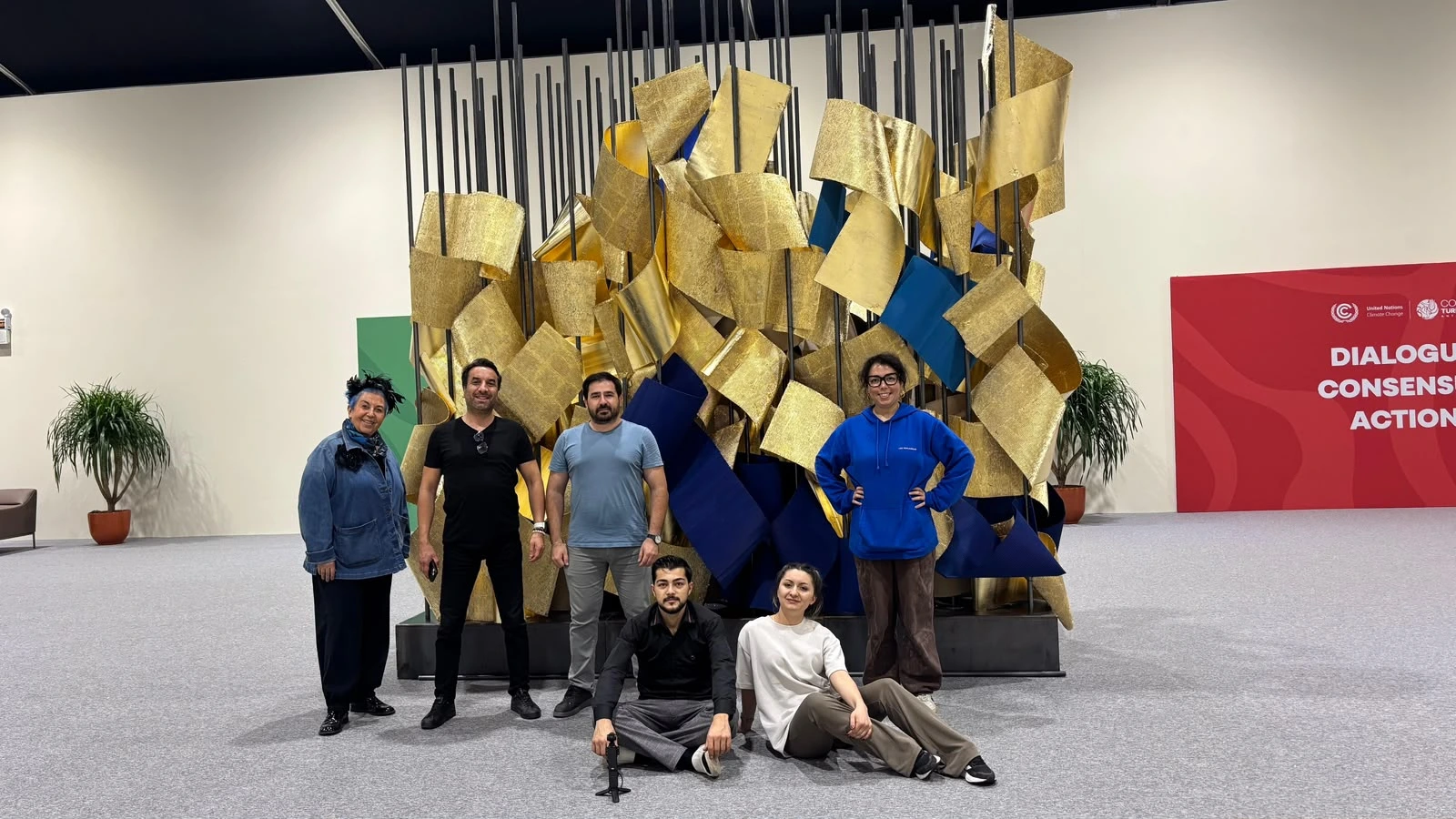
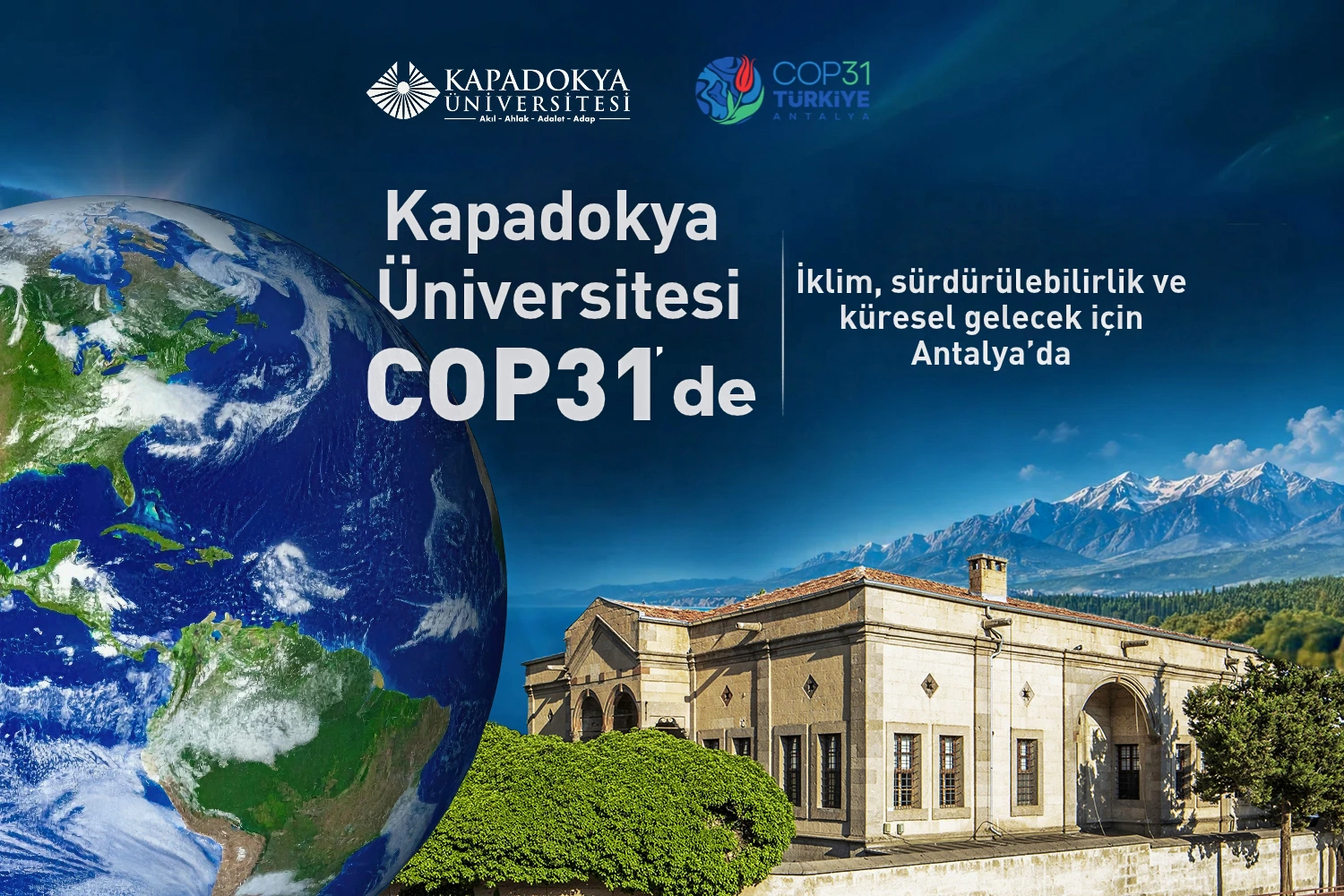
Through its academic and applied research in the fields of sustainable tourism, climate change adaptation, destination management, and environmental sustainability, our university will take center stage at the United Nations Climate Change Conference (COP31).
Cappadocia Model to be Discussed in Green Zone
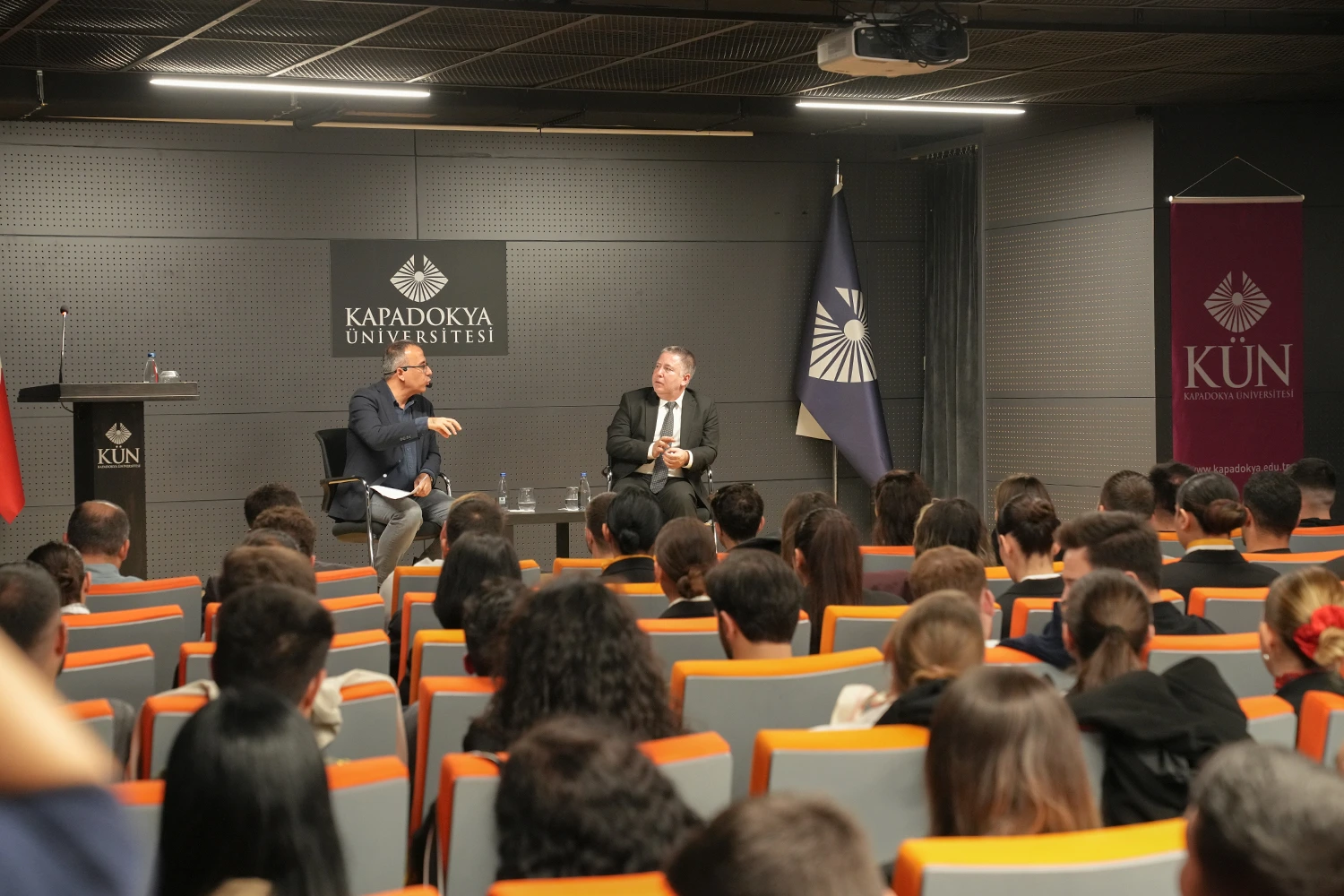
One of the important meetings in the COP31 program of our university will be the panel entitled “Cappadocia Model: Sustainable Tourism, Gastronomy and Cultural Heritage in the Age of Climate Crisis”, which will be held in the Green Zone on November 9, 2026. The panel, which will be moderated by Marketing Türkiye Editor-in-Chief Günseli Özen, will discuss different aspects of the conservation of Cappadocia's natural and cultural heritage and the sustainable development of tourism and gastronomy.
At the panel, our Rector Prof. Dr. Hasan Ali Karasar will evaluate the effects of climate change on regional tourism and agricultural ecosystems and share his views on climate change adaptation processes and sustainable tourism policies. In the session, which will be attended by representatives from the public, academia, tourism and gastronomy world; different topics will be raised, ranging from the protection of cultural heritage to the management of natural resources, to tourism practices responsible for the contribution of local producers to gastronomy.
Our University Will Take Part in Different Sessions of COP31
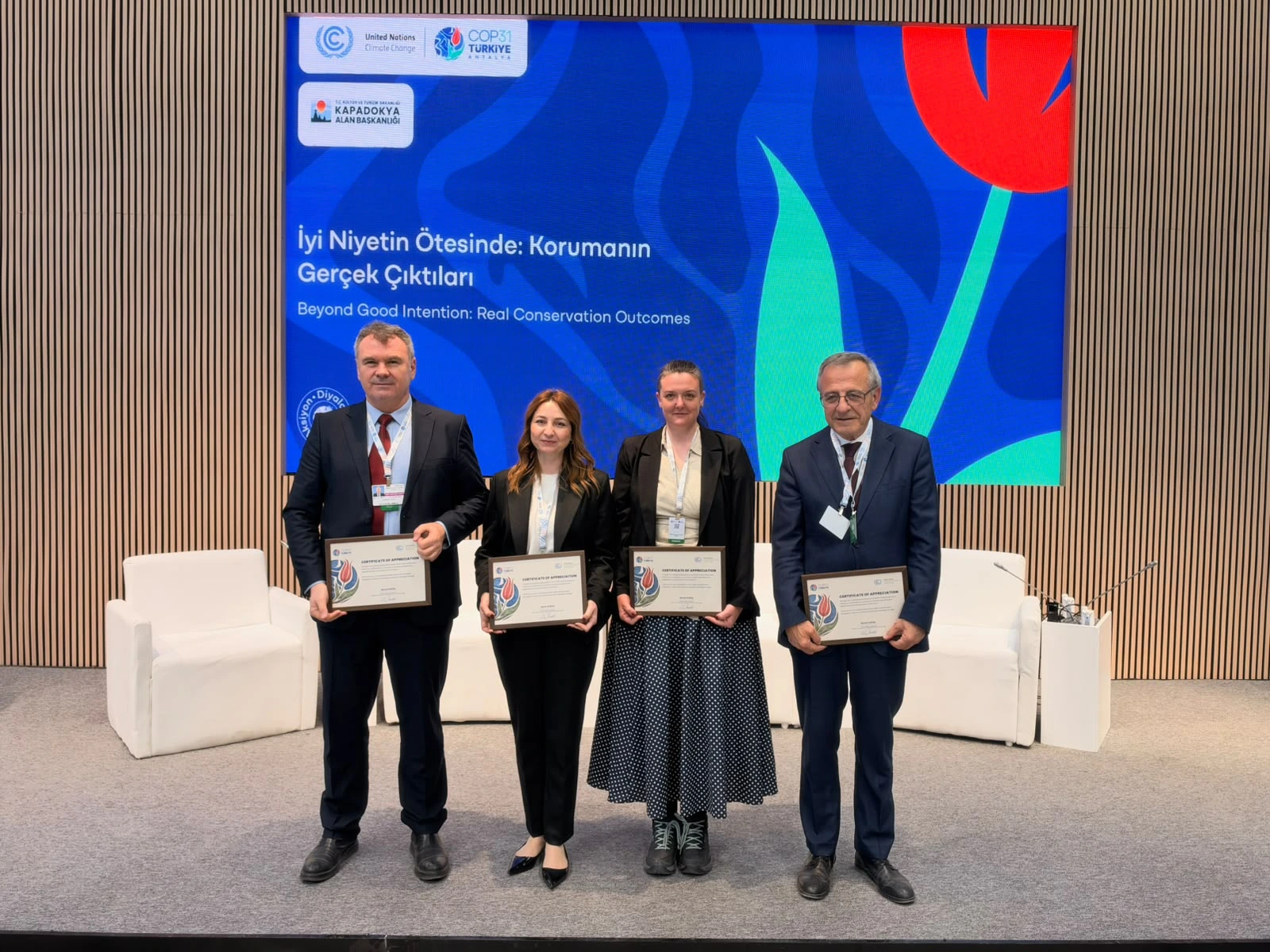
Our Rector Prof. Dr. Hasan Ali Karasar and our University faculty members Prof. Dr. Candan Gökçeoğlu, Associate Professor Dr. Sinan Akıllı, Associate Professor Dr. Halil Burak Sakal, Dr. Associate Professor Avşin Ayhan and Dr. Lecturer Selda Öztürk participated in different sessions and studies during COP31, while our University Research and application work will also be shared with participants through booth and digital demonstrations.
The Leaders Session to be held within the scope of the conference will be attended by our Rector Prof. Dr. Hasan Ali Karasar, our Chairman of the Board of Trustees Funda Aktan, Prof. Dr. Candan Gökçeoğlu, Assoc. Dr. Sinan Akıllı and Assoc. Dr. Halil Burak Sakal.
Four Studies to Meet International Participants
Taking its contributions under COP31 beyond panels and sessions, our university will share with international participants four studies on 20 November on destination sustainability and climate decision support systems, international climate collaborations, reducing food waste in tourism and researching microplastic pollution.
The Dei-Climate project, conducted by Associate Professor Dr. Halil Burak Sakal, aims to transform the data infrastructure of the Destination Excellence Index developed by our University into a data-driven decision support system by integrating the data infrastructure with emission, energy, water, waste and climate risk indicators. The DEI-SDG study, which will be discussed on the same day, presents a proposal for international cooperation in which this infrastructure is linked to the Sustainable Development Goals and climate action.
Application-Oriented Studies from Tourism to Environmental Research
The Waste-Free All Inclusive Model in Sustainable Tourism and Green Kitchen Star Certification Program, developed by Prof. Dr. Mehmet Bahar in collaboration with Professional Hotel Managers Association, focuses on reducing food waste in hospitality businesses. The aim of the study is to monitor food waste with AI-assisted cameras and smart weighing systems and to develop waste prevention applications in line with the data obtained.
The research proposal titled Determination of Microplastic Pollution Level in Urgüp Wastewater Treatment Plant and Discharge Area, addressed by Dr. Selda Öztürk, is aimed at producing scientific data that will contribute to environmental management by examining microplastic pollution in treated water, sewage sludge, sediment and soil samples.
Our university will share with international participants its work in different fields ranging from sustainable tourism to environmental research, data-driven decision-making mechanisms to the protection of local values by combining the academic and practical experience it has developed in Cappadocia during COP31 with the international climate agenda.