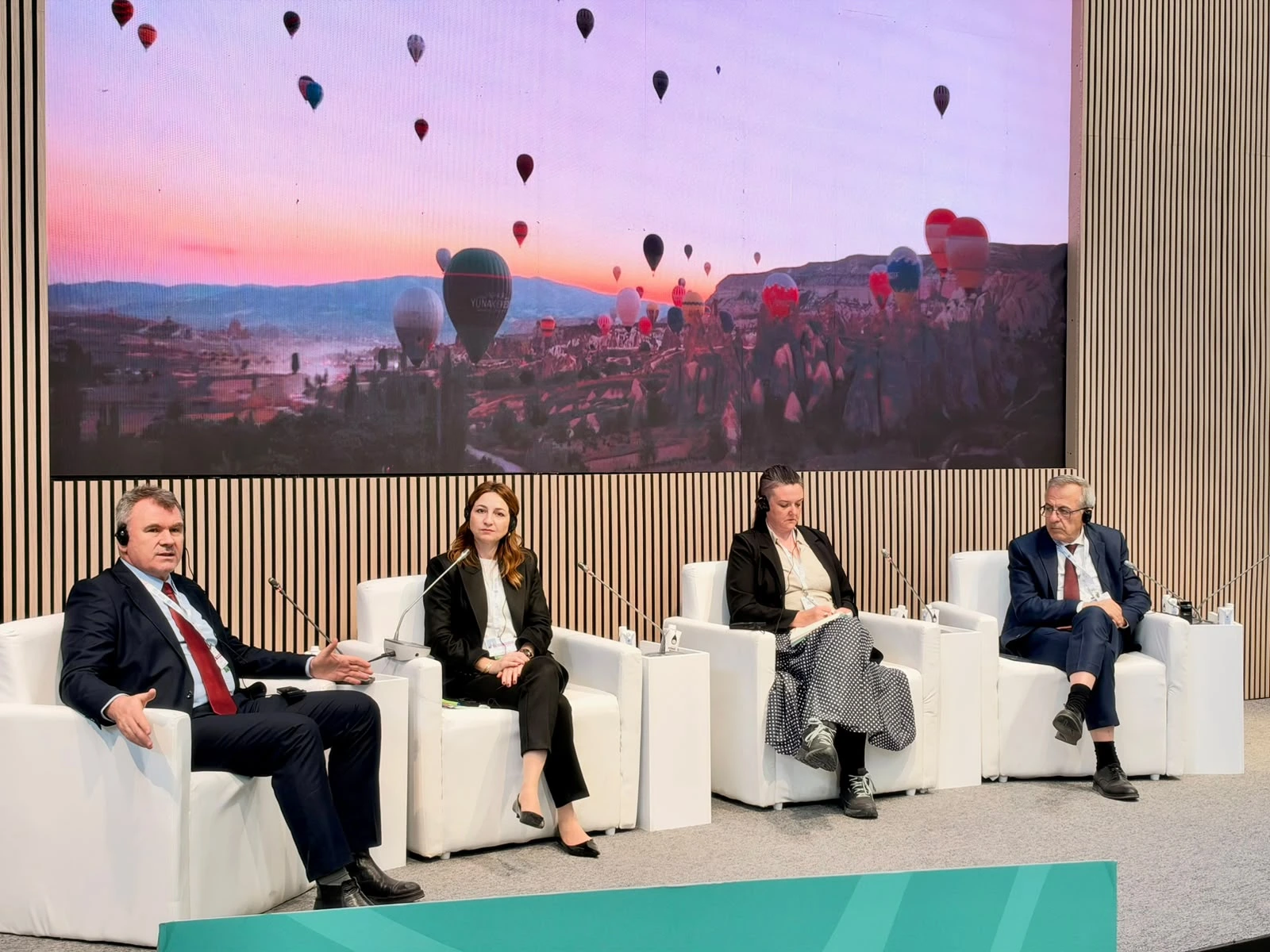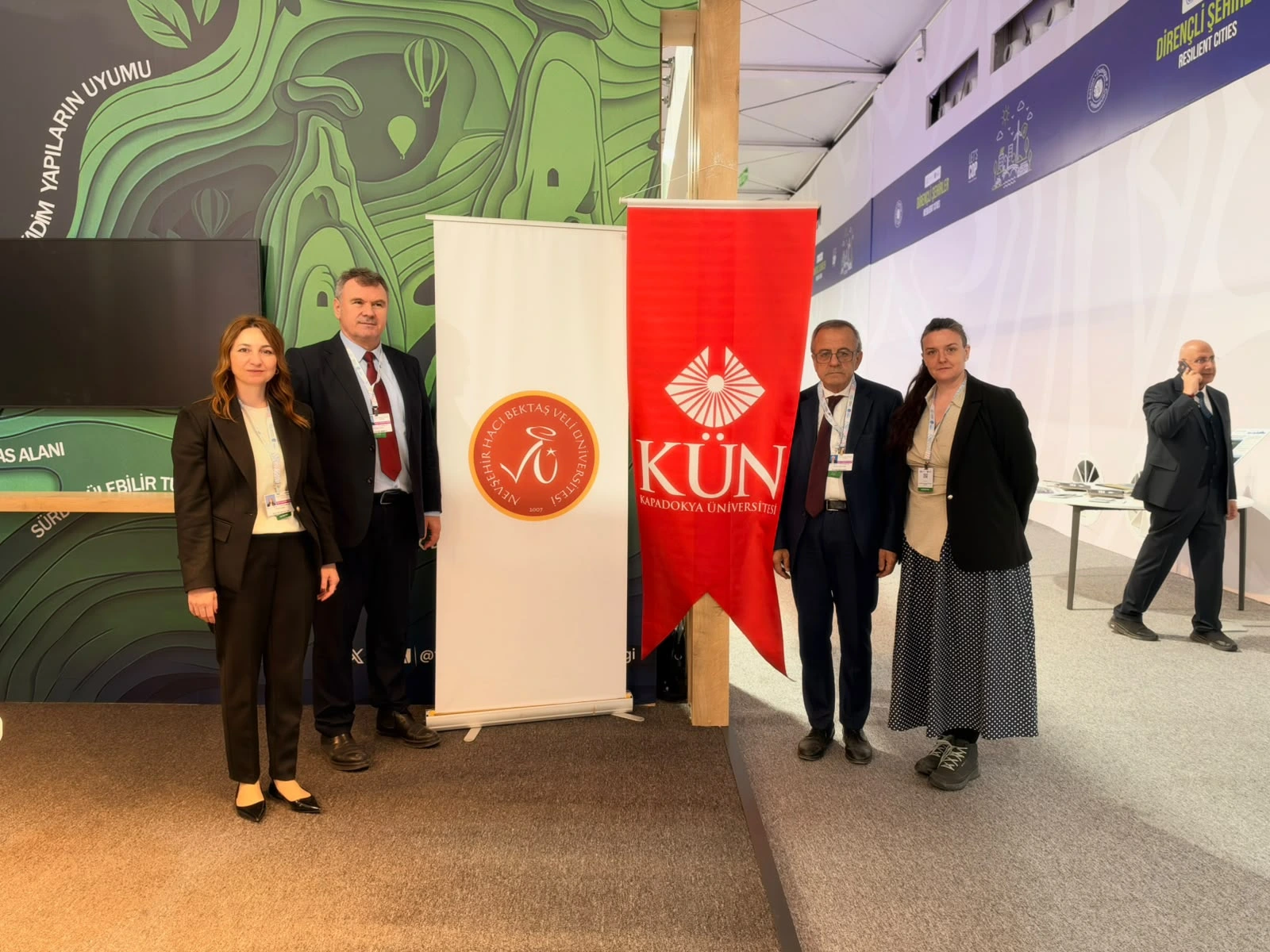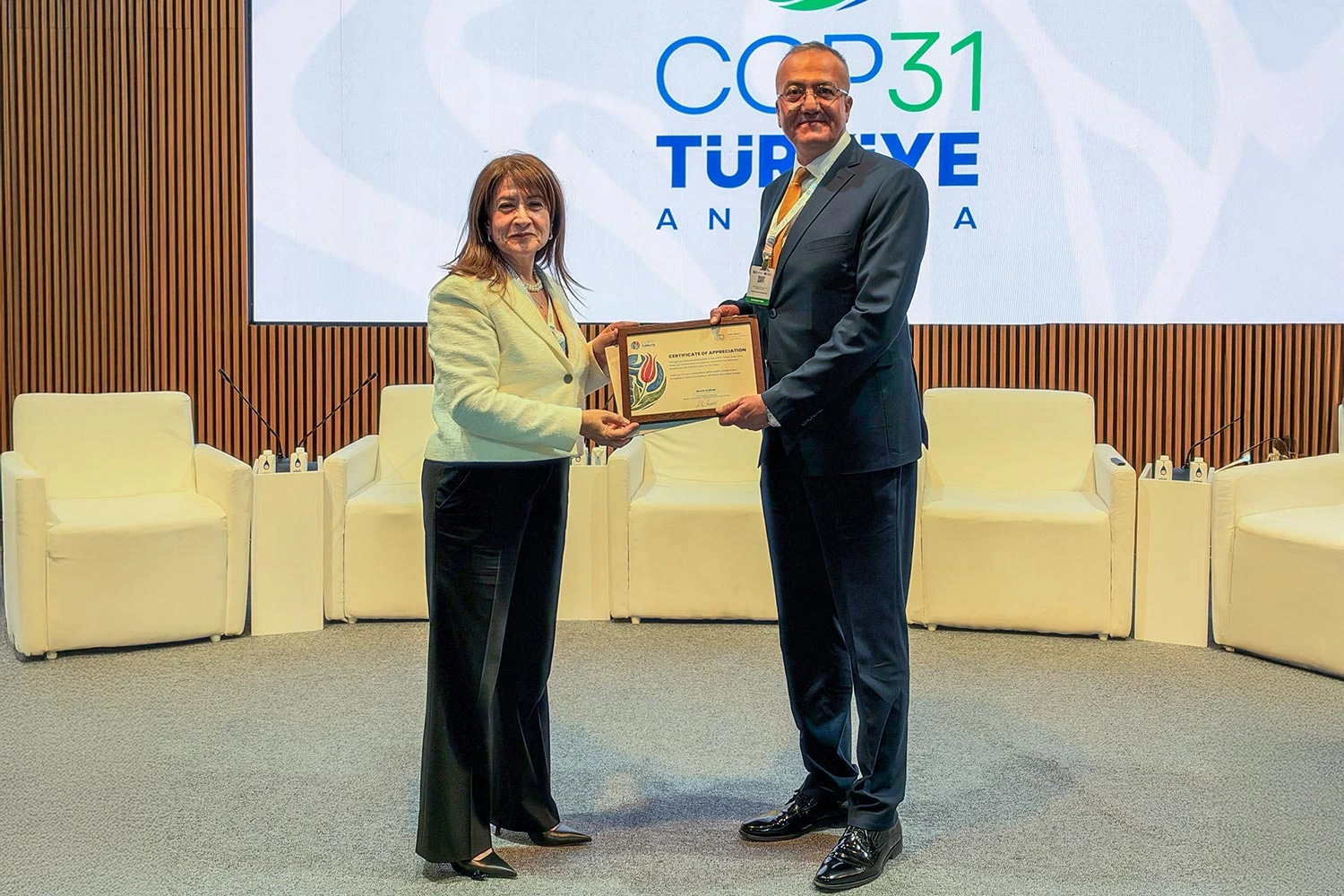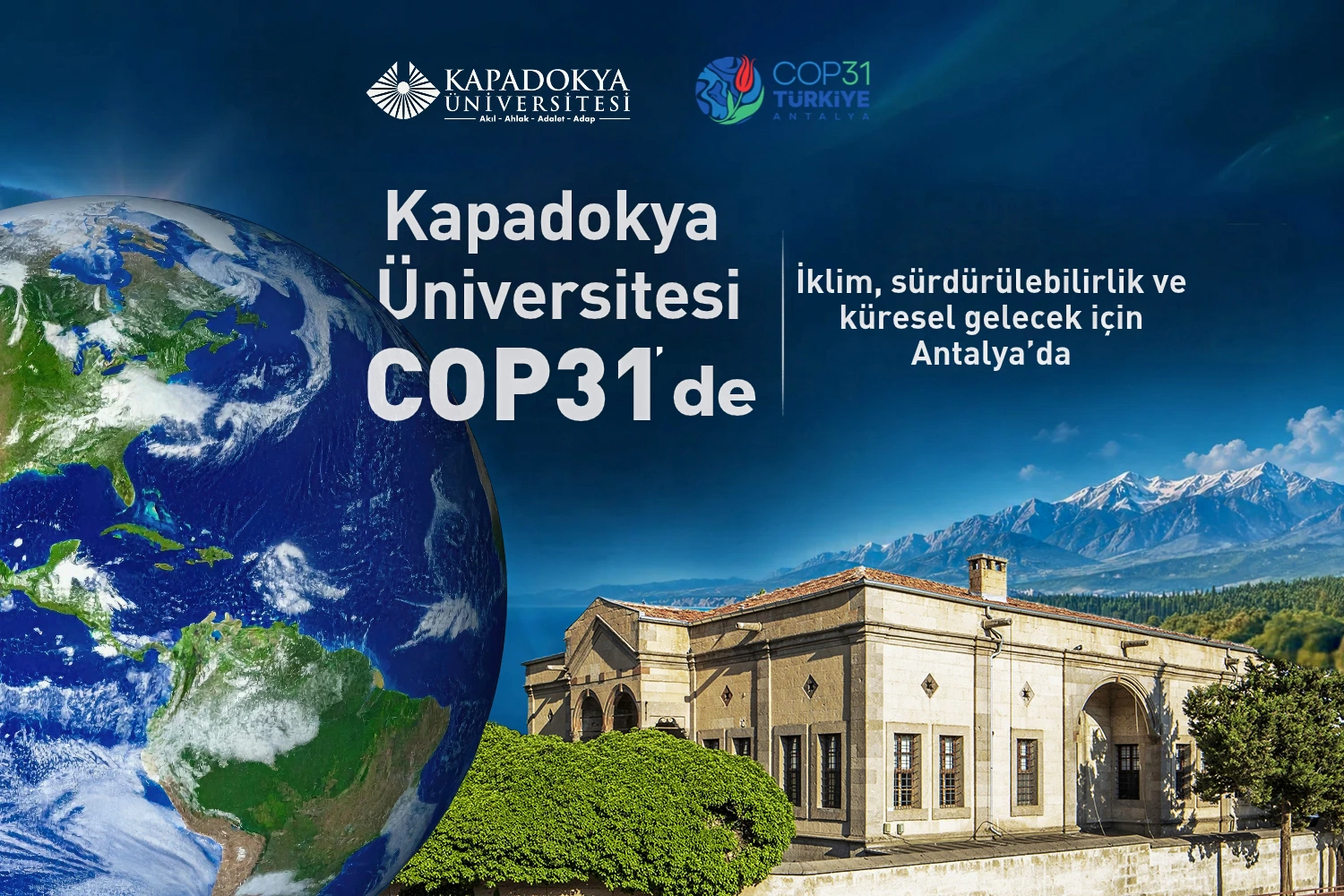
While COP31 was underway in Antalya, Prof. Dr. Candan Gökçeoğlu from our university participated in the panel titled “Beyond Good Intentions: The Real Outcomes of Conservation” in the Green Zone.
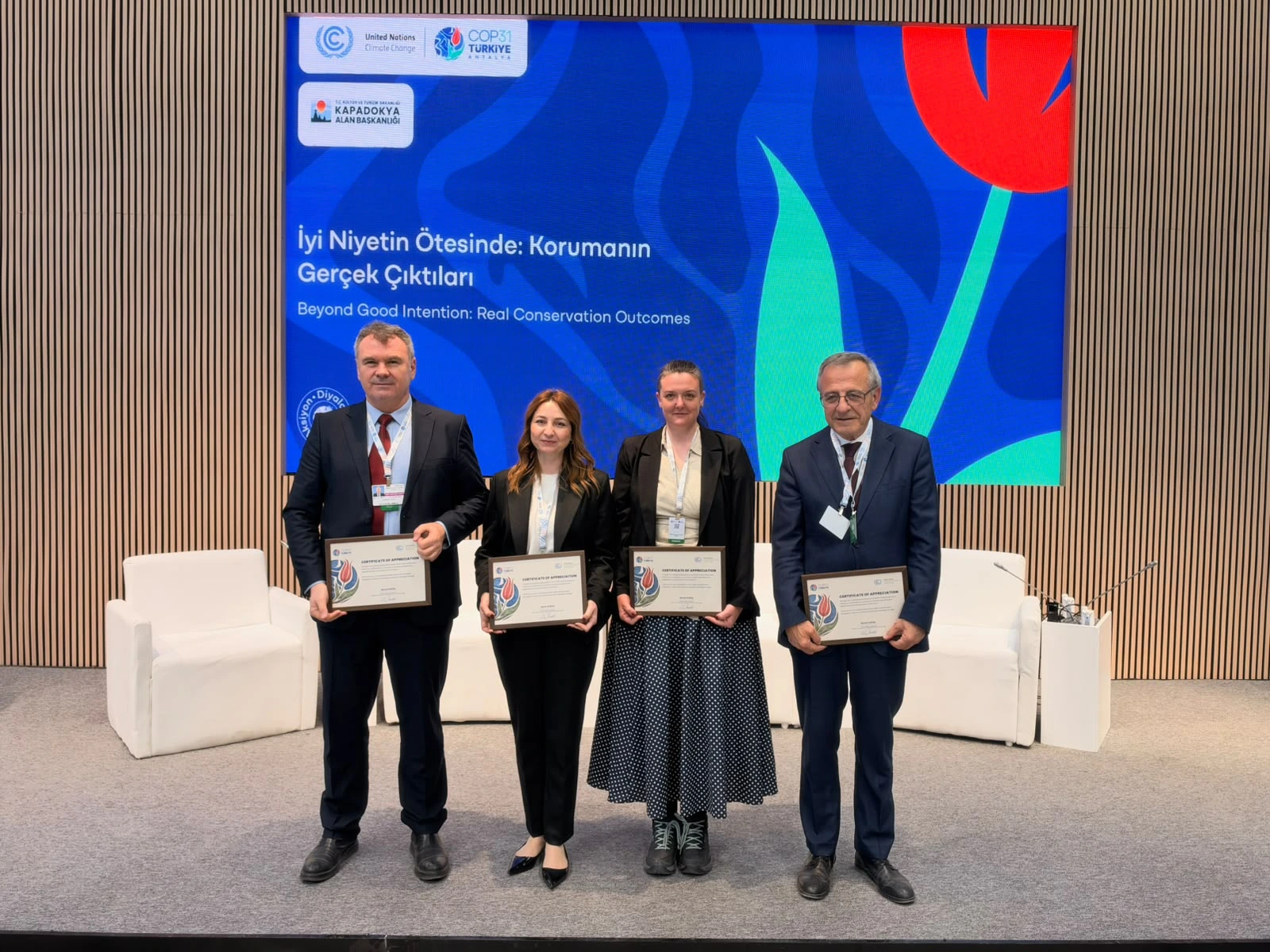
The panel discussed the geological and ecological structure of Cappadocia, the effects of climate change on natural processes, conservation policies and the needs for the sustainable future of the region. Prof. Dr. Candan Gökçeoğlu pointed out that natural formations change over time without human influence, stressing that the landscape that Cappadocia has today is also the result of natural processes that spread over many years.
A Holistic Approach to the Protection of Cappadocia
Referring to the need to correctly define the limits of human intervention in the protection of natural and cultural assets in Cappadocia, Gökçeoğlu pointed out that uncontrolled opening of new areas or enlargement of existing gaps can disrupt the balance of the structure, especially in rock-carved structures.
Gökçeoğlu stated that protection does not mean stopping the natural erosion of peribacea or the geological transformation of the region, stressing that human interventions that weaken rock structures must be avoided.
Gökçeoğlu stated that the Cappadocia Area Presidency offers a holistic structure in terms of the protection of the region. “The Area Presidency is a well-thought-out structure. Well thought out in terms of regulation and in terms of law. Because we need to look at the issue holistically,” he said.
“Conservation also needs a resource.”
Gökçeoğlu also mentioned the importance of funding and human resources in terms of sustainability of conservation work, and pointed out that monitoring risks such as monitoring natural structures, creating safe walking areas, rock falls and underground cavities requires serious technical work.
Gökçeoğlu said: “It is possible to do these things, but it needs a budget, it needs human resources. Funding is needed on the one hand,” he said, stressing that conservation policies should be supported not only by goodwill, but by scientific planning and adequate resources.
“It's not enough to be a knowledge society, we need to be a scientific society.”
At the end of his speech, Gökçeoğlu pointed out the decisive role of education and science in conservation policies, stating that scientific approach should be central to a sustainable future, stating, “It is no longer enough to be an information society in our age. We need to be a scientific society. The foundation for protecting the world and protecting life is education, the foundation is science,” he said.