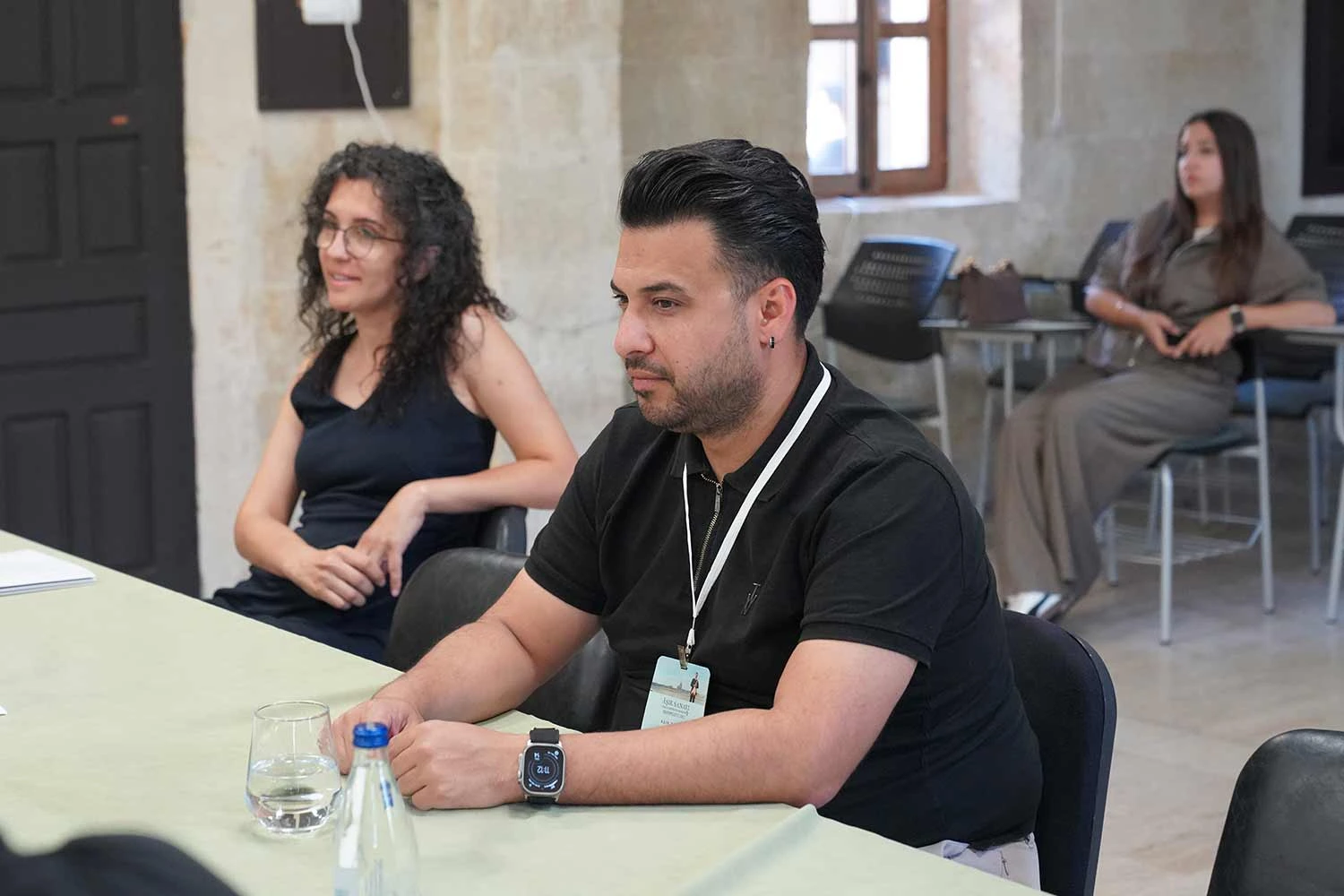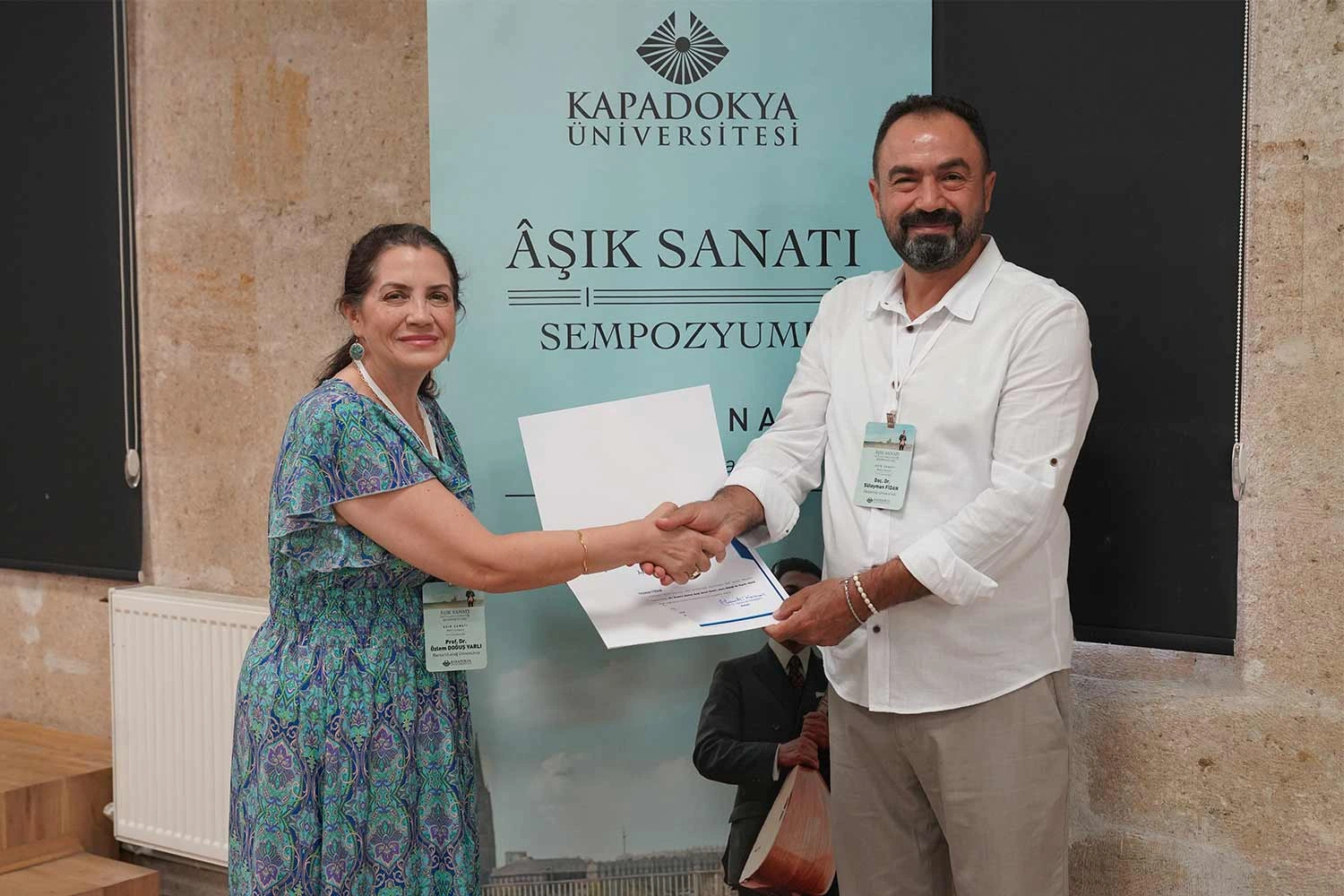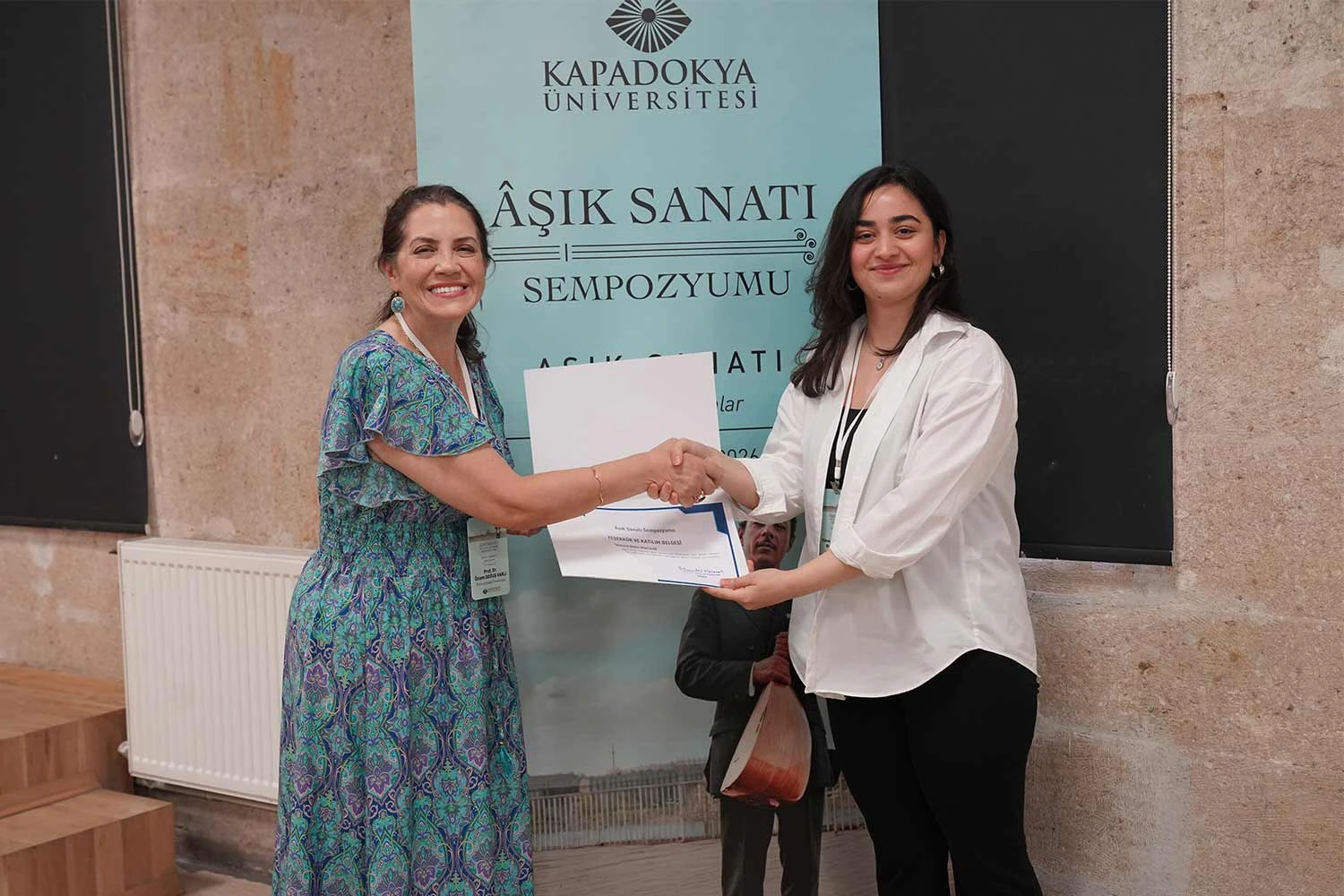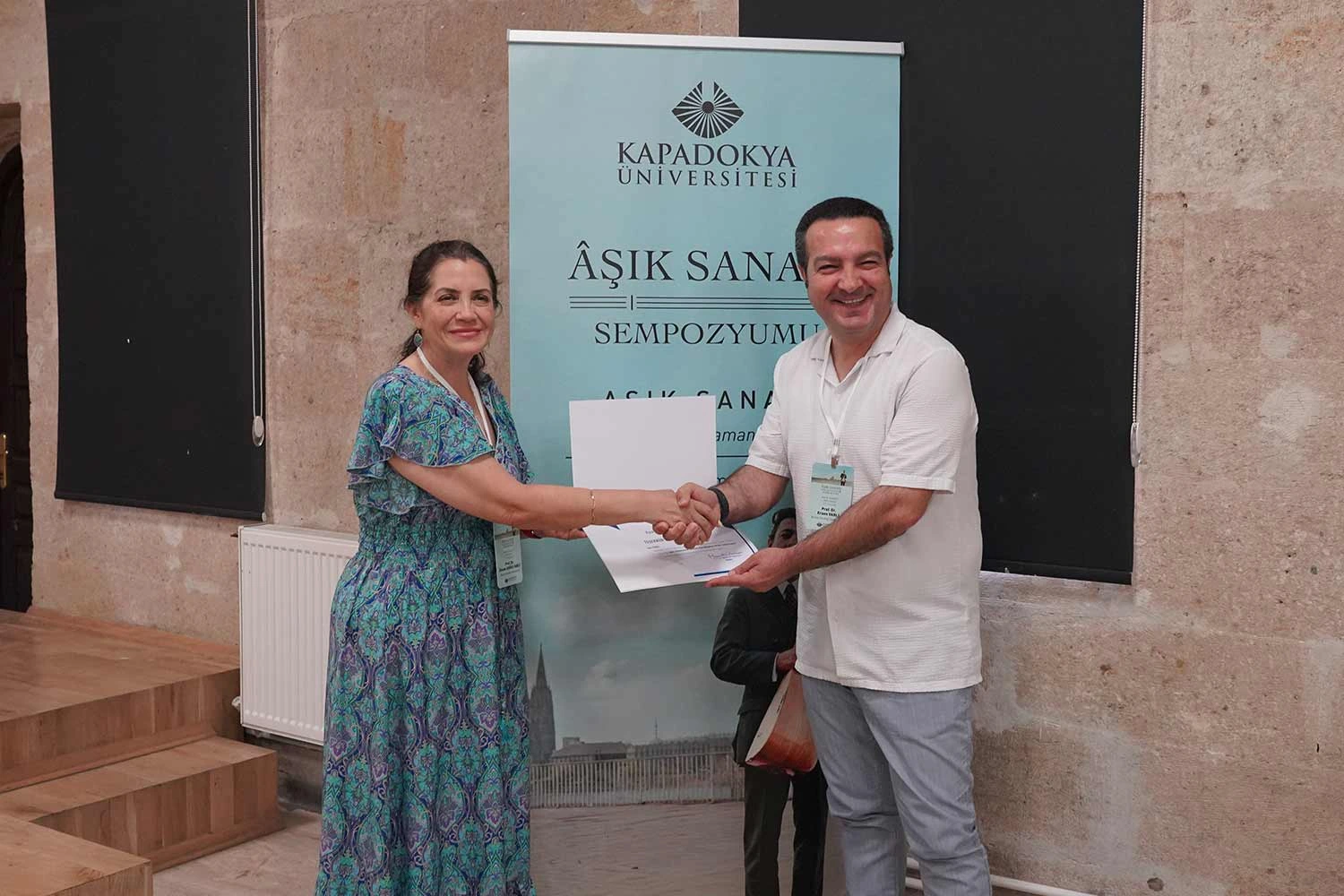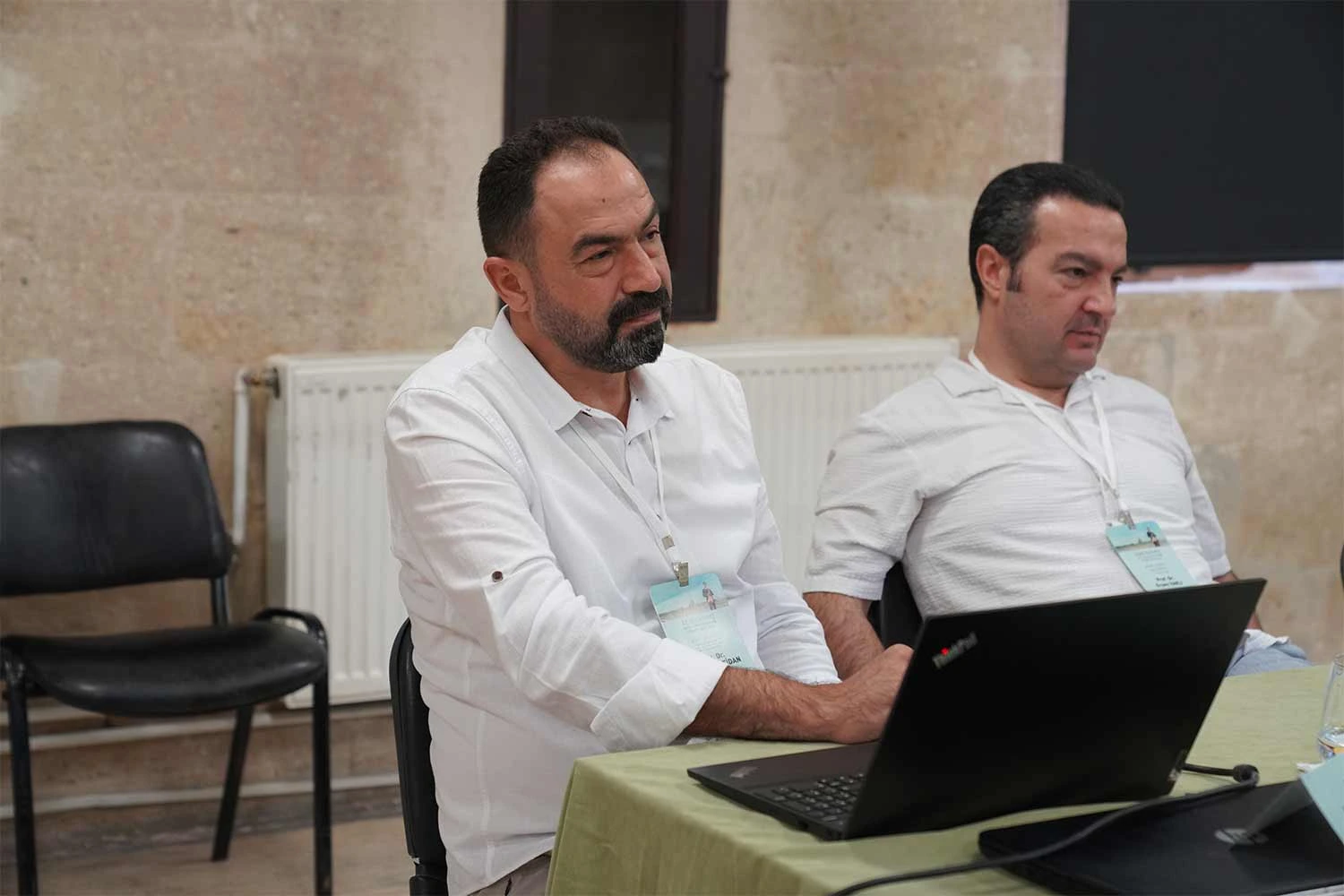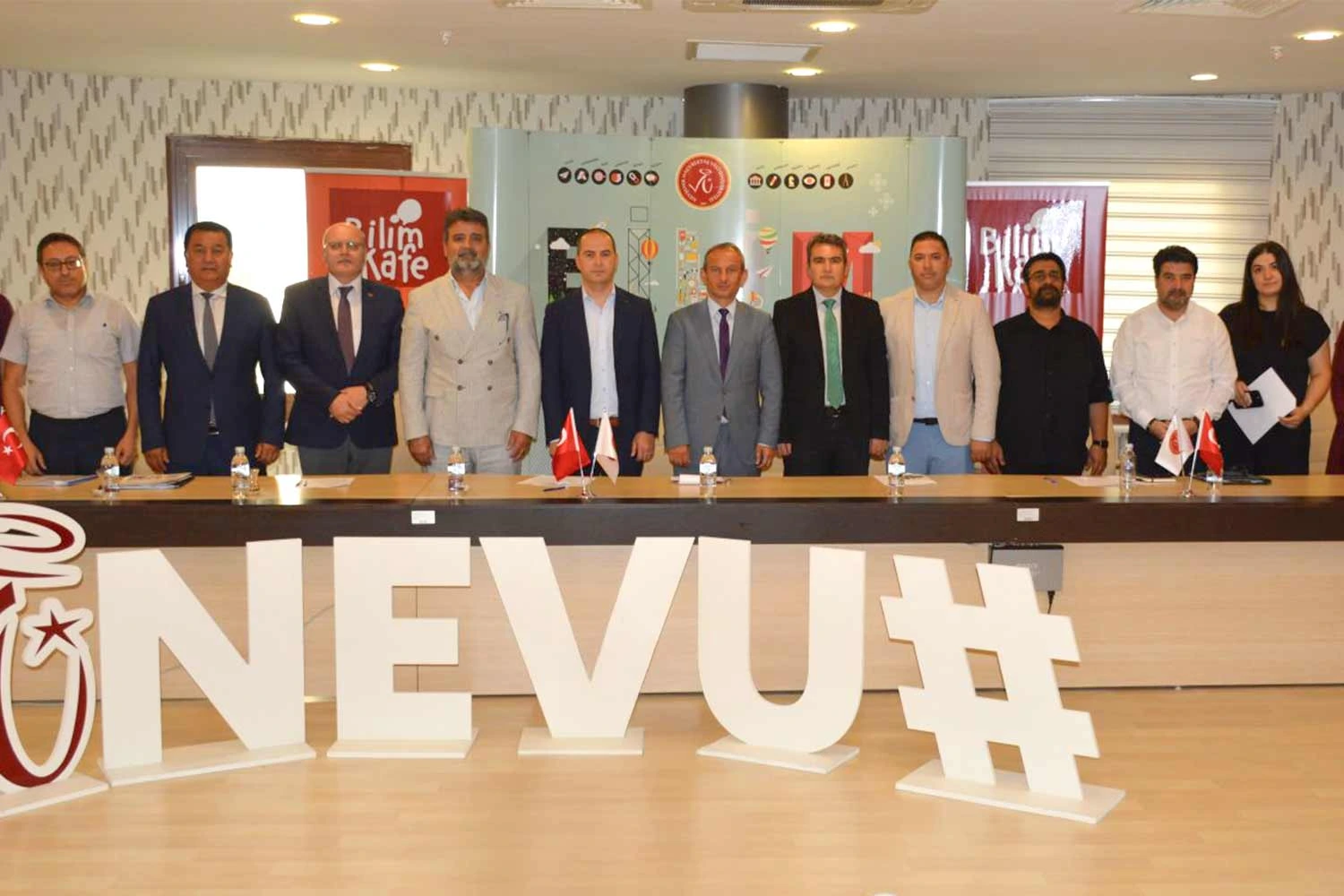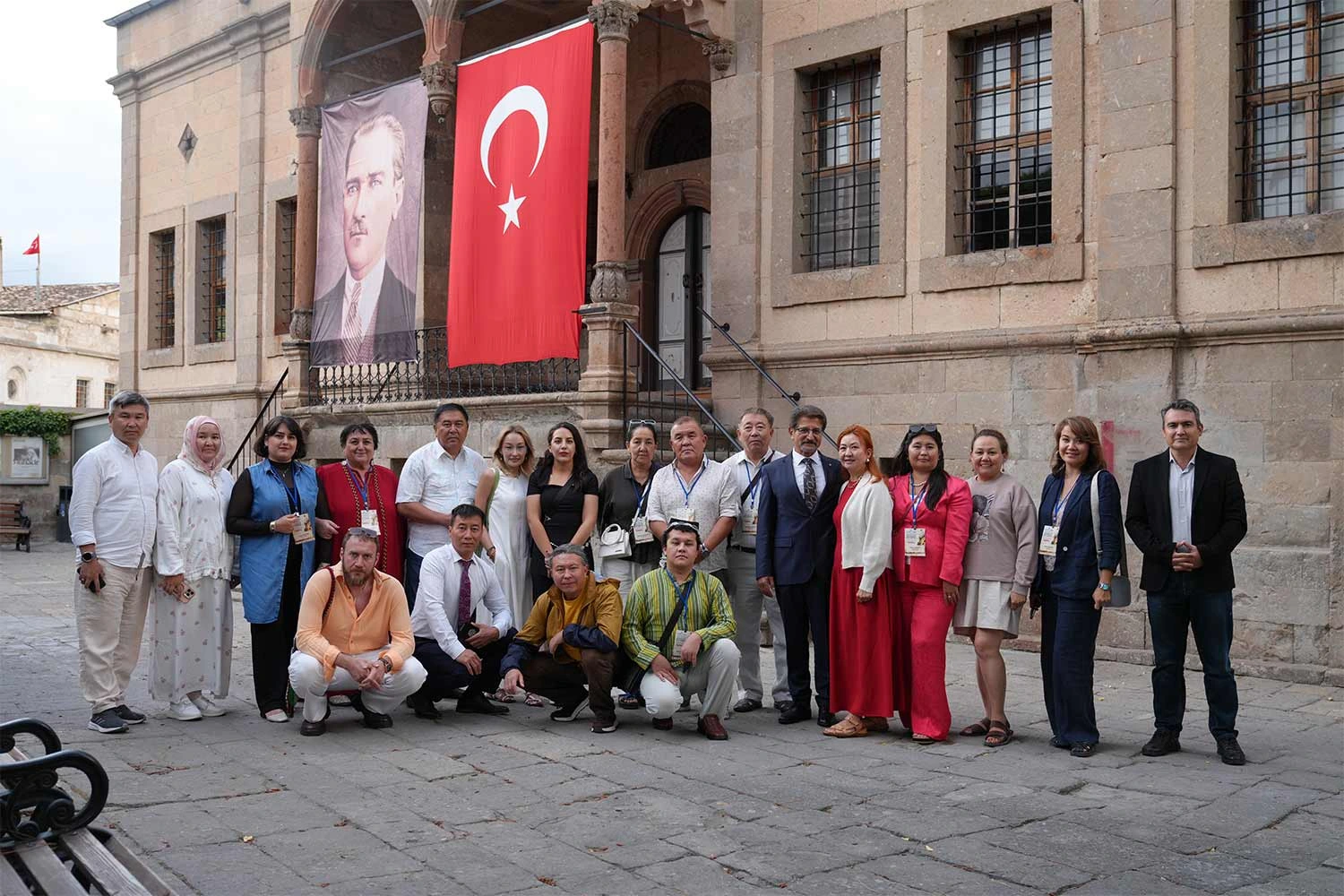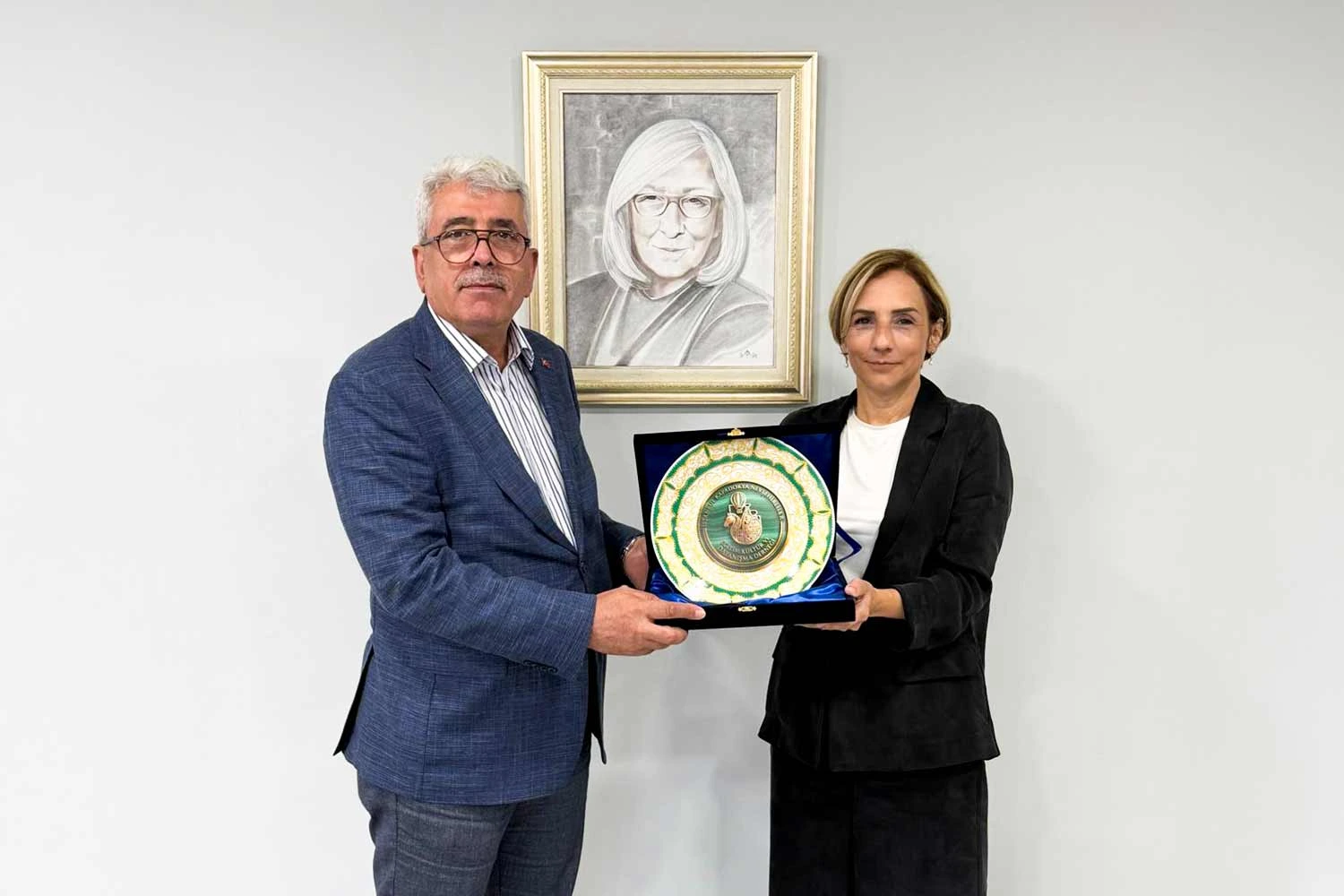
The sixth Symposium on Love Art, hosted by our university, was held at our Mustafapaşa Campus.
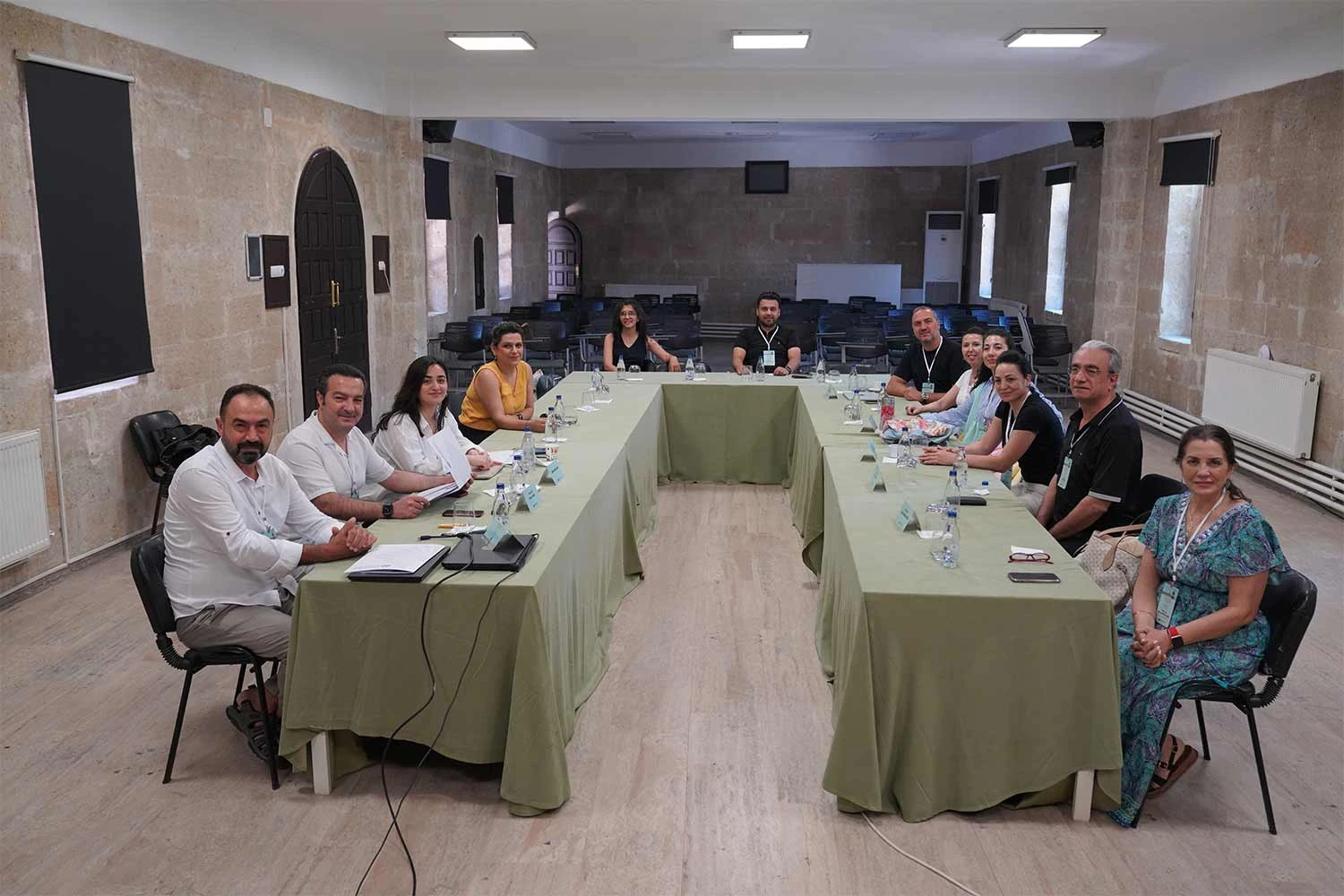
In the symposium, organized under the theme “Modern Times”, the relationship between the minstrelsy tradition, which has been lived for centuries with the relationship of word, sedge and master-apprentice relationship with modernity, digitalization and social transformation was discussed from the perspectives of different disciplines.
Starting with the opening speeches of Associate Professor Yusuf Gökkaplan and Associate Professor Çağla Yılmaz, the symposium brought together researchers from Turkey and abroad. In the program, the historical depth of the art of minstrelsy, its contemporary practices and orientations regarding its future were discussed in many ways.
To the symposium: Prof. Dr. Anna Oldfield, Prof. Dr. Abdullah Akat, Prof. Dr. Özlem Doğuş Varlı, Prof. Dr. Sevilay Çınar, Prof. Dr. Feyzan Göher, Prof. Dr. Ersen Varlı, Assoc. Dr. Makbule Oral, Assoc. Dr. Yusuf Benli, Asst. Dr. Süleyman Fidan and Belküs Hilkis Ulaş contributed with his statements.
The scientific program was conducted under the titles “Digital Age and Archiving”, “Digital Memory, Community Memory and Continuity”, “Performance Venues and Performers” and “Recording Technology and the Recorded Music Industry”.
In the sessions, topics ranging from archiving the art of Azerbaijani minstrelsy in the 20th century to the transformation of the master-apprentice relationship in the digital age, from community memory to female performers, from new performance spaces to the ethics of minstrelsy were evaluated. The performance of love in the metropolis, the tradition of singing in the Siberian Turks, the influence of recording technologies on copyright issues and the relationship of the recorded music industry with the minstrelsy art of the recorded music industry were also among the discussion areas of the symposium.
The two days' worth of papers and evaluations showed that the art of minstrelsy is not just a cultural heritage that needs to be preserved by inheriting from the past; it is a living tradition that continues to exist by transforming in new media, changing performance environments and recording technologies.
The symposium paved the way for new research, discussion and cooperation opportunities regarding the continuity of the minstrelsy tradition in the face of the changes brought by modern times.
A Six-Year Tradition in the Footsteps of the Straw and the Word
The Aşıklık Art Symposium, which was started by our university in 2021, has transformed into an institutional scientific tradition that has developed around a different theme every year, forming its own memory, transcending the boundaries of academic encounter. The series of symposiums tracing the meanings that the art of minstrelsy has acquired in different periods, geographies and cultural environments, has brought together the accumulated past with scientific thought and opened the ground for new research and discussions.
The relationship of the art of falling in love with the Alevi-Bektashi tradition in 2021, which constitutes the first link of this journey, was discussed around the values of human love, tolerance, peace, reason, morality and justice. In 2022, Abdal tradition, Abdal music, living Abdal art Emphasis was placed on this and the transfer of this cultural accumulation to future generations. The Year of Aşık Veysel 2023, in the 50th year of the death of the great master, brought to the fore his poetry, the world of thought and the legacy of oral culture that he left to humanity.
With the theme of the 2024 Erzurum Year of Erzurum, which raised hundreds of lovers, the deep accumulation of Erzurum, which extends from coffee in love to oral culture environments, was examined; the symposium was dedicated to the memory of our founder, Alev Alatlı. With the 2025 European theme, he moved beyond Anatolia and the art of minstrelsy with the traditions of love in the Balkans, Hungary and Northern Europe The cultural links between them were assessed.
The theme of Modern Times, which was set in the sixth year, combined this knowledge inherited from the past with the possibilities and problems of the digital age. This six-year journey from Hacı Bektâş-ı Velı's world of thought to the voice of the abdas, from Aşık Veysel's verses to Erzurum's amorous coffees, to digital memory in Europe, revealed that the Symposium on the Art of Aşık has established its own continuity.